Best Infrared Thermometer Gun for Cooking: Top Picks for Every Kitchen
Finding a reliable infrared thermometer gun for cooking helps ensure meats, pies, and sauces reach safe, flavorful perfection. The following five products are selected for versatility, fast responses, and accurate surface readings across grilling, baking, and general kitchen tasks. Each entry highlights practical use, notable features, and what to consider when choosing.
| Product | Brand | Key Use | Emissivity & Range |
|---|---|---|---|
| Etekcity 774 Infrared Thermometer | Etekcity | Meat, Oven, Griddle | 12:1 distance-to-spot; -58°F–842°F |
| ThermoPro TP30 Infrared Thermometer | ThermoPro | Pizza Oven, Griddle, HVAC | 0.1–1.0 emissivity; -58°F–1022°F |
| Kizen LP300 Infrared Thermometer | KIZEN | Grill, Oven, Engine | 0.1–1.0 emissivity; -58°F–1112°F |
| Soonkoda Digital Infrared Thermometer | Soonkoda | BBQ, Pizza Oven | Backlit display; -50℃–500℃ |
| Etekcity 1080 Infrared Thermometer | Etekcity | Meat, Pizza, Griddle | 12:1 D:S; -58°F–1130°F |
Each product below includes a direct link to its Amazon listing, a quick image reference, and a concise feature summary to help you compare at a glance. The selections cover a range of price points and measurement ranges, ensuring you can find a model that suits casual cooking, candy making, or more demanding kitchen tasks.
Etekcity Infrared Thermometer Gun 774

This infrared thermometer features versatile tools for various tasks, including meat, candy, ovens, and griddles. Its laser-enabled 12:1 distance-to-spot ratio allows you to measure temperatures from a comfortable distance, reducing the need to come into contact with hot surfaces. The device is designed for quick surface readings across food prep, refrigeration, and DIY projects. With a broad measurement range, it provides practical flexibility for kitchen experiments or routine cooking checks. The bright display helps visibility in bright or dim kitchen environments, making it a convenient option for home cooks and hobbyists alike.
Key considerations: how far you typically measure from, whether you need a broader distance-to-spot ratio (12:1 is solid for most home kitchens), and whether you prefer a non-contact option for safety around raw meats and hot ovens. This model emphasizes accurate surface temperatures and fast readings, useful when monitoring preheated pans or oven surfaces.
ThermoPro TP30 Infrared Thermometer Gun
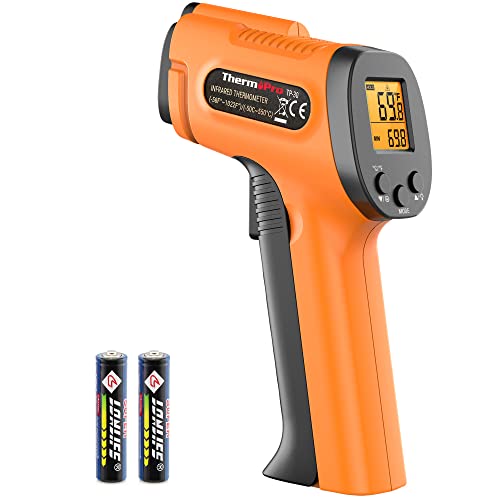
The ThermoPro TP30 is designed for high-accuracy, with a emissivity adjustment range from 0.1 to 1.0 and a wide temperature capacity of -58°F to 1022°F. Its 12:1 distance-to-spot ratio and sub-500-millisecond response time enable quick readings, which is particularly helpful for pizza ovens, grills, or candy making where timing matters. The ability to adjust emissivity makes it adaptable to different food surfaces and cookware materials, from metal trays to stone surfaces. This model suits cooks who want precise temperature control without touching hot surfaces.
Important considerations: emissivity adjustment and response speed are top priorities for precise cooking, baking, or candy processes. For kitchen tasks that involve fragile food items or caramelizing sugars, the TP30’s precise readings can help avoid overcooking. It’s also a practical all-around tool for auto maintenance or home repairs if you need an extra-use IR thermometer.
Kizen Infrared Thermometer LP300

The KIZEN LP300 emphasizes precision with an emissivity range of 0.1 to 1.0 and a recommended 14-inch distance for optimal accuracy. Its wide range covers -58°F to 1112°F (-50°C to 600°C), enabling use in ovens, grills, HVAC testing, and automotive contexts. The unit is designed for quick measurements and easy operation via a trigger, providing instant readings suitable for cooking and baking tasks. This model is attractive for cooks or hobbyists who require both high temperature range and consistent accuracy across diverse surfaces.
Key considerations: the 14-inch distance recommendation helps reduce error due to proximity, but users should ensure a stable hand or tripod for consistent readings. The LP300 is a solid option for multi-environment use beyond the kitchen, which can be a benefit if you also work on vehicles or home repairs.
Soonkoda Digital Infrared Thermometer

The Soonkoda thermometer offers a backlit display for visibility in low-light conditions, with a measurement range of -58°F to 932°F (-50°C to 500°C). Its LCD backlight is activated during operation, making it suitable for nighttime or dimly lit kitchens, barbecue setups, or garages where lighting can be uneven. This model focuses on accessible operation and clear readings for general cooking tasks, pizza ovens, and barbecuing where quick surface temperatures matter for timing and doneness checks.
Considerations: backlit display aids readability in variable kitchen lighting, and the broad range supports a variety of cooking scenarios. It’s a practical entry-point option for home cooks who want a straightforward, easy-to-read infrared thermometer without complex settings.
Etekcity Infrared Thermometer 1080

This model expands the temperature range to 1130°F and maintains a broad -58°F to 1130°F capacity, a critical feature for high-heat tasks like pizza oven monitoring and candy making where precise surface temperature matters. The 12:1 distance-to-spot ratio helps maintain safe distances during use. The device is designed for versatile kitchen measurements, including meats and oven surfaces, while offering a professional-grade feel at a home-cook price point. It’s particularly suitable for cooks who frequently test hot pan surfaces or grill grates during busy cooking sessions.
Key considerations: between this model and other 12:1 ratio tools, the 1080 provides a robust maximum temperature, which is valuable for high-heat applications. It’s well-suited for cooks who want a durable, high-range unit that handles a wide range of culinary tasks with speed and clarity.
Buying Guide: What To Consider When Choosing A Cooking Infrared Thermometer Gun
- Measurement range: Choose a model that covers the temperatures you cook at most, from freezing to beyond boiling. A range extending above 1000°F is beneficial for high-heat tasks like searing, candy work, or pizza ovens.
- Distance-to-spot ratio (D:S): A higher D:S (e.g., 12:1) means you can measure temperatures from farther away, which is safer and helps with precision on large surfaces.
- Emissivity settings: Some thermometers let you adjust emissivity (0.1–1.0) to match different food surfaces or cookware materials, improving accuracy on shiny metals or stoneware.
- Response time: Fast readings (<500 ms) save time during busy cooking periods, especially when timing delicate processes like candy making or searing.
- Display readability: Backlit displays enhance visibility in dim kitchens or outdoor settings, ensuring you can read temperatures quickly without squinting.
- Probe capability: Some models combine infrared readings with a meat probe for internal temperatures. This 2-in-1 capability is helpful for BBQ, roasting, or multi-stage cooking.
- Durability and ergonomics: Look for a compact, lightweight design with a comfortable grip, especially if you handle multiple tasks or long cooking sessions.
- Battery life and accessories: Consider battery type, runtime, and whether the device includes features like a MAX/MIN/AVG display, which can aid in longer measurement sessions.
When selecting among models, consider your typical cooking environment—from a home kitchen to a windy outdoor grill. If you frequently monitor precise candy temperatures or pizza oven surfaces, prioritize high maximum temperatures, fast response, and emissivity control. If you mainly perform quick checks on meat and pan surfaces, a simpler model with a clear display and solid D:S ratio should suffice. For hobbyists who also tackle automotive or HVAC projects, a versatile, high-range thermometer like those listed above offers broad utility beyond cooking alone.