Best Wood for Butcher Block Cutting Boards for Kitchen Pros
Selecting the right wood for a butcher block cutting board affects knife performance, durability, and food safety. This guide highlights top wood choices and five Amazon boards that balance end-grain protection, moisture management, and ease of maintenance. Whether you prefer acacia, walnut, bamboo, or mahogany, the right board supports efficient prep and long-lasting use in American kitchens.
Summary of chosen products
| Product | Brand | Wood Type | Size | Notable Feature |
|---|---|---|---|---|
| End Grain Butcher Block Cutting Board [1.5″ Thick] | Ziruma | Acacia | 16″ x 11″ | End grain, non-toxic finish |
| THETCHRY Walnut Wood Cutting Board | thetchry | Walnut | 17″ x 13″ | End grain, self-healing properties |
| Bamboo Wood Cutting Board | Allsum | Bamboo | 16″ x 11″ | 1″ thick, side handles, juice grooves |
| Ironwood Gourmet 28218 End Grain Board | Ironwood Gourmet | Acacia | 14″ square | Premium end grain, versatile board |
| Wooden Butcher Block End Grain Cutting Board | FANICHI | Unknown Wood (End Grain) | 17″ x 13″ | End grain, multipurpose, juice groove |
End Grain Acacia Block by Ziruma

The Ziruma cutting board uses 100% natural acacia wood with an end grain construction that protects both blade and board. The 1.5-inch thickness provides robust durability suitable for heavy chopping, and the surface is conditioned with beeswax, flaxseed oil, and lemon oil to help resist moisture and staining. Free from BPA and petroleum-based mineral oils, it emphasizes safe, long-term use in busy kitchens. End grain cores promote knife longevity by reducing edge dulling and self-healing small cuts over time, keeping the board looking pristine after repeated use.
THETCHRY Walnut End Grain Board

THETCHRY offers a large, double-sided walnut end grain cutting board with a 17″ x 13″ footprint. The walnut end grain surface provides durability and a self-healing property where cuts close quickly, helping maintain a sharp edge on knives. In addition to cutting, the board features a thoughtful design with a deep juice groove to prevent spills, plus a built-in sorting compartment for convenient ingredient staging. Rubber non-slip feet help secure the board during use, promoting safety in active cooking spaces.
Allsum Bamboo Cutting Board With Handles
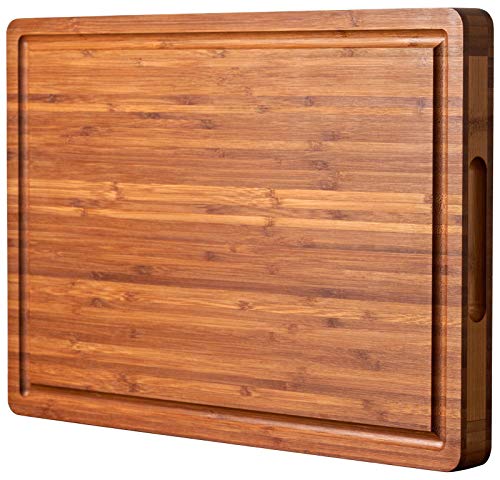
This bamboo cutting board combines durability with practical design. The 1-inch thickness provides stiffness for heavy prep tasks, while the hidden side handles make it easy to transport from countertop to table. Deep juice grooves catch liquids during meat or fruit prep, helping to keep counters clean. Bamboo is a fast-growing, renewable resource that resists moisture but still benefits from proper drying after washing to prevent warping over time.
Ironwood Gourmet End Grain Square Board

Ironwood Gourmet’s end grain square board provides a premium prep surface with rich color variations typical of acacia wood. It’s designed to serve as both a cutting and a serving board, suitable for vegetables, meat, cheese, and bread. End grain construction minimizes wear on knives and extends the board’s life when cared for properly. The board’s durable build makes it a staple for home and light commercial use, offering a traditional look with modern practicality.
FANICHI End Grain Wooden Board
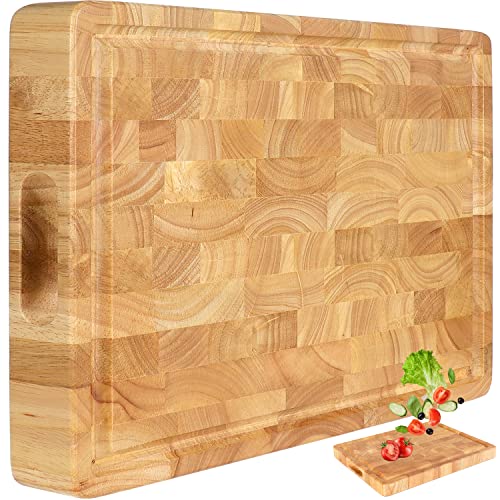
The FANICHI board presents a substantial 17×13-inch surface with 1.5-inch thickness, featuring an end grain construction for durability and knife-friendliness. The design emphasizes multipurpose use, with a juice groove and inner handles to facilitate carving, chopping, and serving. The natural-wood aesthetic offers a versatile addition to any kitchen, and the end grain pattern helps resist knife marks and maintain a smooth cutting surface over time with proper care.
Buying Guide: Key Considerations When Choosing a Wood Cutting Board
- End grain vs. edge grain: End grain boards tend to be gentler on knives and self-heal minor cuts, but they can be pricier and heavier. Edge grain boards are typically more affordable and lighter but may show wear sooner.
- Wood type and safety: Look for food-safe finishes and natural, non-toxic coatings. Acacia and walnut are commonly chosen for durability and knife-friendliness, while bamboo is a hardy, renewable option.
- Size and thickness: Larger boards provide more workspace but require more storage. Thick boards (around 1.5 inches) resist warping and offer a stable cutting surface for heavy tasks.
- Maintenance and care: Regular oiling with food-grade mineral oil or beeswax-based finishes helps prevent drying and cracking. Hand washing is usually recommended; avoid soaking and dishwasher use to extend life.
- Juice grooves and double-sided design: Juicer grooves prevent liquid spills; double-sided boards offer versatile use, especially for separating meats from produce or using one side for serving.
- Handles and stability: Side handles or finger grips aid maneuverability, while non-slip feet enhance safety on slippery countertops.
- Environmental considerations: Choose sustainably sourced wood when possible. Bamboo is renewable and resists warping, but some purists prefer traditional hardwoods like acacia or walnut for longevity.
Comparative quick picks
- Best for knife protection: End grain boards, particularly acacia and walnut, which cushion blade edges during cutting.
- Best value: Bamboo boards that combine durability with a reasonable price point and practical features like juice grooves and handles.
- Best multi-use: Reversible boards with integrated serving features and compartments for prep organization.
- Best for large tasks: Extra-large boards with substantial thickness for heavy chopping and carving.
In summary, the best wood for a butcher block cutting board balances knife safety, durability, and ease of maintenance. The five boards highlighted here reflect popular choices for American kitchens, each offering unique advantages in material, design, and functionality. When selecting, consider your typical prep tasks, storage space, and how you plan to care for the board to ensure long-lasting performance in daily use.