Best Steel for Chef Knives: Top Durable Blades for Every Kitchen
Choosing the right steel matters when selecting a chef knife. The steel type influences edge retention, corrosion resistance, and how easy it is to sharpen. This guide highlights five standout options that balance performance and value for American kitchens, from ultra-sharp German alloys to Japanese high-carbon steels and resilient stainless varieties. Each knife leverages distinct steel characteristics to satisfy professional cooks and home chefs alike.
| Product | Brand | Steel Type Focus | Notes |
|---|---|---|---|
| MOSFiATA 8″ Chef Knife | MOSFiATA | High Carbon German EN1.4116 | Razor edge, corrosion resistance, full tang |
| SHAN ZU 8″ Chef Knife | SHAN ZU | 10Cr15Mov Damascus stainless | 67-layer steel, durable and rust-resistant |
| HOSHANHO 8″ Kitchen Knife | HOSHANHO | 10Cr15CoMoV high carbon stainless | Excellent rust resistance and hardness |
| Global 8-Inch Chef’s Knife | Global | High-tech molybdenum/vanadium stainless | Lightweight, razor-sharp edge retention |
| PAUDIN 8″ Chef Knife | PAUDIN | High carbon stainless steel | Versatile, crafts long-lasting sharpness |
MOSFiATA 8″ Chef Knife

MOSFiATA combines high carbon German EN1.4116 steel with a full tang and a Santoprene/ polypropylene handle. The blade features a laser-engraved decoration and a 16° edge per side for precise, stable cuts. The steel’s carbon content supports hardness and edge retention, while chromium provides corrosion resistance. The ergonomic design aims to reduce wrist tension during extended use.
SHAN ZU 8 Inch Damascus Chef Knife
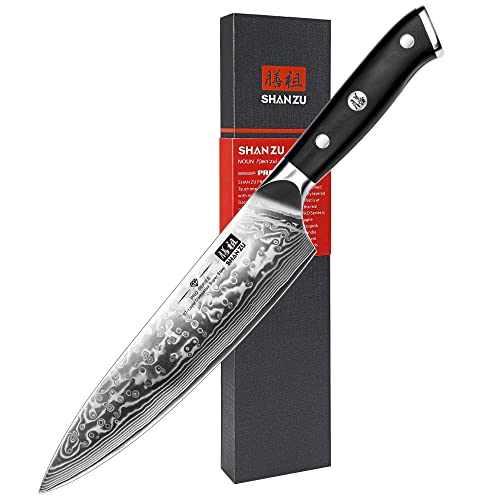
SHAN ZU uses 10Cr15Mov Damascus stainless steel with a 67-layer construction. Its core provides high hardness and edge retention, while the layered steel offers wear resistance and an attractive Damascus pattern. The knife emphasizes rust resistance and durability, with an ergonomic handle designed for comfortable, secure grip during long prep sessions.
HOSHANHO 8″ High-Carbon Chef Knife

HOSHANHO leverages Japanese 10Cr15CoMoV high carbon stainless steel, delivering hardness up to 60 HRC with strong corrosion resistance. The blade’s matte finish and modern manufacturing techniques aid durability and maintenance. The pakkawood handle provides a balanced, comfortable grip, supporting safe, precise control in busy kitchens.
Global 8-Inch Chef’s Knife

Global offers a lightweight, balanced design with a high-tech molybdenum/vanadium stainless blade. Its razor-sharp edge and renowned precision are hallmarks of Japanese-inspired construction, suitable for chefs who value effortless slicing and minimal maintenance while preserving blade integrity over time.
PAUDIN 8 Inch Chef Knife

PAUDIN’s high carbon stainless steel construction offers a versatile kitchen tool for bread, vegetables, and meats. The 2 mm thick blade and hand-polished finish aim to maintain a sharp edge with daily use. The ergonomic handle design supports balance and control for families and professional kitchens alike.
Buying Guide: Key Purchase Considerations
- Steel composition and hardness: Higher hardness (often in the 60 HRC range) provides longer edge retention but can be more challenging to sharpen. Softer steels sharpen easier but may require more frequent maintenance.
- Alloy type and stain resistance: Stainless steels resist rust and staining with less maintenance, while high-carbon steels can hold an edge longer but require careful drying and regular oiling to prevent corrosion.
- Edge geometry and grind: A sharper 15–16° per side bevel offers precise cuts for delicate work, while a broader bevel improves durability for heavy-duty tasks.
- Weight and balance: Lighter knives with a well-balanced feel reduce fatigue during long prep sessions; full-tang constructions contribute to overall stability and strength.
- Handle material and ergonomics: Handles like pakkawood, Micarta, or synthetic composites affect grip comfort, washability, and longevity in a busy kitchen.
- Maintenance and care: Some steels require more frequent maintenance (drying, hand-washing, occasional oiling). Consider your routine when choosing between stainless and high-carbon options.
- Intended use: Home cooks may prioritize versatility and ease of sharpening, while professionals may seek maximum edge retention and corrosion resistance for heavy daily use.
- Budget and value: Price often reflects steel quality, build, and brand reputation. Consider long-term durability and replacement costs when evaluating value.