Best Gas Hot Water Heaters for On‑Demand Comfort and Efficiency
Gas-powered tankless water heaters provide on-demand hot water with compact profiles and potential energy savings. This guide highlights top options available on Amazon, focusing on high flow rates, reliable performance, and practical features for homes with multiple hot water needs. The selections below cover natural gas and propane models, including indoor installations and digital controls that help maintain steady temperatures even during busy showers or kitchen tasks.
Choice Snapshot
| Product | Brand | BTU | GPM |
|---|---|---|---|
| Ranein Natural Gas Tankless Water Heater with Vent Pipe | Ranein | 100,000 | 4.3 |
| Nessxa Natural Gas Tankless Water Heater | Nessxa | 95,540 | 3.7 |
| Nessxa Tankless Water Heater Propane Gas | Nessxa | 95,540 | 3.7 |
| Ranein Propane Gas Tankless Water Heater | Ranein | 80,000 | 3.6 |
| 2025 GEN II Ranein Propane Gas Tankless Water Heater | Ranein | 80,000 | 3.6 |
Below are five notable gas tankless water heaters, chosen for their balance of capacity, efficiency, and user-friendly features. Each entry includes a concise overview, key specs, and practical notes to help compare options for your home hot-water needs.
Ranein Natural Gas Tankless Hot Water Heater

Performance: This on-demand unit delivers 100,000 BTU of heating capacity with a 4.3 GPM flow, suitable for supplying hot water to a bathroom, kitchen, and bar area. It supports continuous hot water without a preheating delay, aligning with households that demand reliability during peak usage. Four Seasons Function automatically adjusts temperature based on outdoor input, while Kitchen and Bathtub presets tailor output for common domestic tasks. The vent-pipe design suits indoor installations in many homes.
Nessxa Natural Gas Tankless Water Heater

Features: This indoor model provides 14L/min (3.7 GPM) with 95,540 BTU input. A Fahrenheit/Celsius dual display lets users monitor temperatures in real time, with automatic overheat protection for safety. The unit uses industrial-grade materials and a rust-resistant heat exchanger to handle typical indoor humidity and reduce maintenance needs. Its instant-on performance minimizes wait times between fixtures, making it well-suited for multi-fixture households.
Nessxa Tankless Water Heater Propane Gas
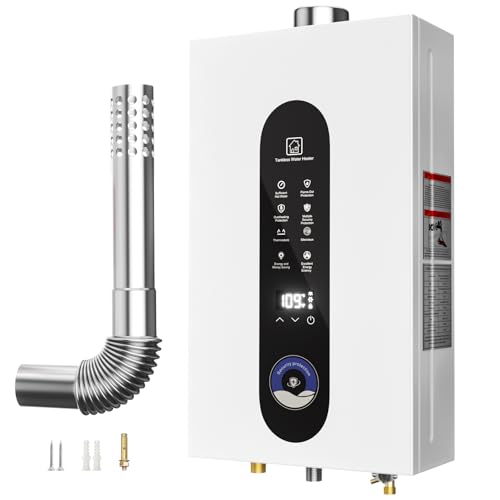
Performance: Propane input at 95,540 BTU (28 kW) yields about 14 L/min (3.7 GPM) with a 25°C temperature rise. The dual-unit Fahrenheit/Celsius display supports easy temperature monitoring, and an automatic overheat warning helps prevent scalding. The unit’s construction emphasizes durability with a Category II vent pipe and corrosion-resistant components, supporting steady output across typical indoor usage scenarios.
Ranein Propane Gas Tankless Water Heater

Performance: With 80,000 BTU and 3.6 GPM, this model supports 2-3 water points including a bathroom, kitchen, and bar. It emphasizes immediate hot water delivery with no preheat delay. Notably, it includes multiple preset modes—Dish, Fruit, Elderly, and Infant—providing convenient, temperature-appropriate outputs for varied daily tasks while prioritizing safety and comfort.
2025 GEN II Ranein Propane Gas Tankless Water Heater
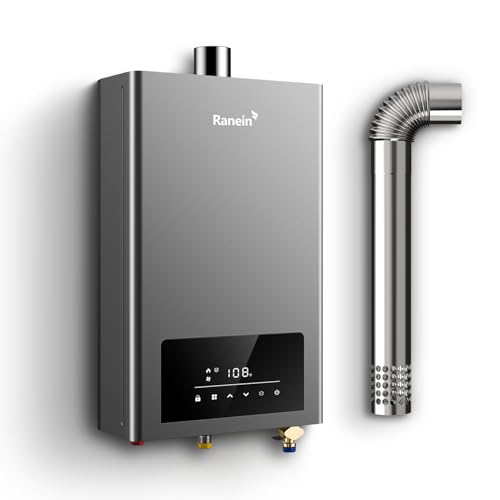
Features: This Gen II model supports up to 3.6 GPM at 80,000 BTU, designed for 2-3 taps (shower, kitchen sink, bar). It emphasizes stable water temperature without sudden spikes, making it suitable for families with infants or elderly household members. The LED temperature control panel enhances user visibility, and compact installation remains a practical choice for indoor setups.
Buying Guide: Gas Tankless Water Heaters — Key Considerations
When selecting a gas tankless water heater, consider flow needs, fuel type, venting requirements, safety features, and installation constraints. Below are core factors to compare across options.
- Flow Rate and Temperature Rise: Measure the number of fixtures you typically run simultaneously. A unit around 3.5–4.0 GPM is often sufficient for 2–3 fixtures, depending on desired shower temperature rise. For homes with higher demand, opt for models with higher BTU input and steady output.
- Fuel Type and Availability: Choose natural gas or propane based on your home’s fuel supply and local costs. Propane models can be versatile in off-grid or smaller spaces but may require propane storage considerations.
- Ventilation and Installation: Indoor venting is common for gas tankless heaters. Ensure proper venting compliance and clearance from combustible materials. Some units include vent pipes or specify compatible venting—this affects installation cost and complexity.
- Temperature Control and Safety: Look for dual-unit displays (Fahrenheit/Celsius), digital temperature regulation, and automatic overheating protection. Some models offer presets or child-safe temperatures, which can be valuable in households with kids.
- Durability and Materials: Industrial-grade housings, rust-resistant heat exchangers, and corrosion-resistant venting contribute to longer service life, especially in humid indoor environments.
- Maintenance Needs: Features like easy access for descaling, built-in filtration, and clear service guidance help minimize downtime. Consider a maintenance plan to extend the life of the unit.
- Size, Budget, and Warranty: Compare physical size to available installation space, approximate total cost (including venting and installation), and warranty terms for parts and labor.
Use this guide to align product specs with household goals, such as maximizing continuous hot water for simultaneous activities or prioritizing energy efficiency to reduce energy usage. The models listed above provide a range of BTUs, GPM, and control options to fit different homes and climates.