Best Electric Tankless Hot Water Heaters for Reliable Home Comfort
Electric tankless heaters offer on-demand hot water with energy-saving benefits for American homes. This guide highlights five top-rated models, focusing on capacity, efficiency, installation needs, and suitability for multiple outlets. Each product section includes a quick overview, key features, and practical considerations to help you choose the right unit for your household hot water needs.
| Product | Key Flow (GPM) | Voltage / Power | Best For |
|---|---|---|---|
| Rheem 18kW 240V Tankless Electric Water Heater | Up to 4.4 | 240V / 18kW | Whole-home small to medium usage |
| Orbek 14kW Tankless Water Heater | Up to 3.38 | 240V / 14kW | 2–3 outlets, efficient point-of-use |
| EcoSmart ECO 11 | Up to ~1.6–3.0 (depending on inlet temp) | 240V / 13kW | Compact, space-saving, point-of-use |
| Rheem RTEX-24 24kW | Higher flow for larger homes | 240V / 24kW | Whole-house trucks of hot water |
| Ranein 18kW 240V | Up to 4.3 | 240V / 18kW | Multi-point, compact footprint |
Rheem 18kW 240V Tankless Electric Water Heater
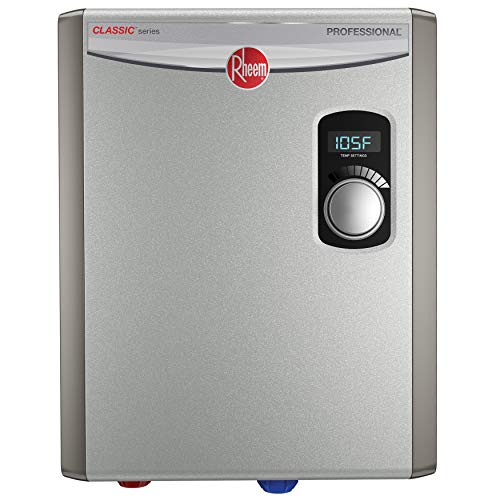
The Rheem unit uses a durable copper immersion dual heating element design and an external digital thermostat with LED display for precise ±1 degree control. Its self-modulating technology adjusts power to meet demand, helping conserve energy without sacrificing hot water. Fields serviceable components simplify maintenance. Expect flow rates up to 4.4 GPM, suitable for moderate whole-home use or multi-point setups depending on climate and fixture demand.
Orbek 14kW Tankless Water Heater

This 14kW model requires a 240V/60A two-pole breaker and 6 AWG wiring, with 1/2″ NPT water connections. It delivers up to 3.38 GPM for 2–3 outlets, ideal for point-of-use or smaller homes where efficient on-demand hot water is desired. The unit emphasizes energy efficiency through water-electricity separation to minimize scale and corrosion, potentially reducing electricity costs compared with traditional heaters. A practical option for compact installations needing reliable hot water on demand.
EcoSmart ECO 11 Electric Tankless Water Heater

The EcoSmart ECO 11 provides endless on-demand hot water with continuous temperature monitoring and controlled flow to maintain precision within 1 degree. It draws high efficiency with an amperage of 54 A and is designed to be 90% smaller than traditional tank heaters, saving space and enabling wall or point-of-use installation. EcoSmart emphasizes energy savings by only heating water when called, making it a strong choice for apartments, small homes, or retrofit projects where space is at a premium.
Rheem RTEX-24 24kW Electric Tankless Water Heater
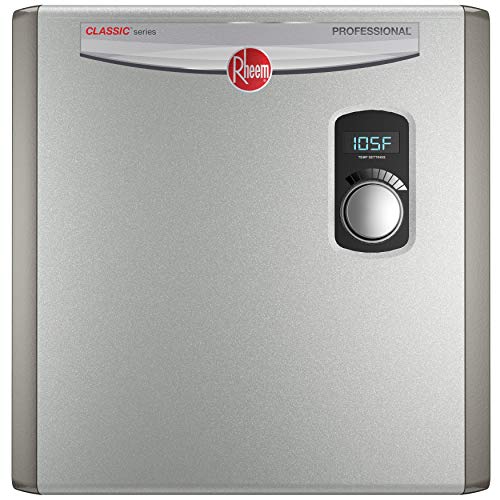
Rheml RTEX-24 requires substantial electrical service—3 x 40-amp double-pole breakers and a robust 200-amp household service are recommended. It delivers continuous hot water for whole-home use, with an adjustable dial and digital temperature display allowing 1-degree increments from 80–140°F. This model is designed for higher-demand households and locations with higher incoming water temperatures, providing dependable performance when configured correctly.
Rheem 11kW 240V Tankless Electric Water Heater
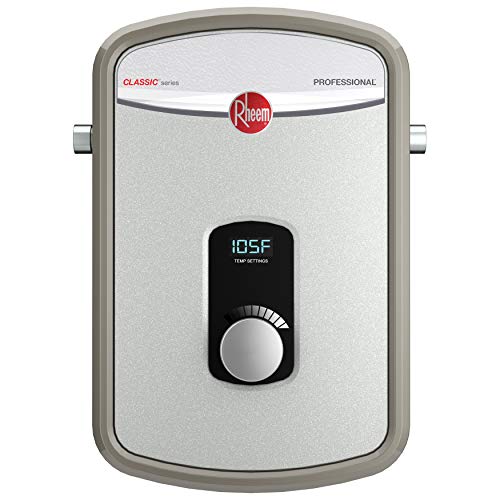
With an on/off dial and adjustable digital temperature display, this model uses self-modulating power control to efficiently provide up to 2.68 GPM. It is suitable for smaller households or point-of-use installations where modest hot water demand exists. The unit balances power draw with consistent temperature, offering a practical solution for apartments or cottages with limited space.
Ranein Electric Tankless Water Heater (18kW)

Ranein’s 18kW model operates at 240V with a compact body designed for space-saving installations. It supports up to 4.3 GPM, making it viable for 2–3 outlets with efficient on-demand heating. It requires proper circuit sizing (two-pole breakers) and 3/4″ NPT water connections. The unit emphasizes high thermal efficiency and a strong flow for mid-sized homes seeking reliable hot water without a tank.
FOGATTI 14kW Tankless Water Heater

The FOGATTI model is designed for 2–3 point-of-use locations with a maximum flow of 3.3 GPM. It fits in tight spaces and requires a 60A two-pole breaker and 6 AWG wiring. Like other tankless units, it heats water on demand, avoiding standby losses and offering a compact footprint suitable for apartments, closets, or under-sink installations. Installation considerations include electrical capacity and the number of simultaneous hot water fixtures you intend to serve.
Rheem 8kW 240V Tankless Electric Water Heater
This compact Rheem unit offers an on/off dial with a digital temperature display and self-modulating power control. With a flow rate up to 1.95 GPM, it is best suited for small spaces or light demand applications, such as single-point usage or a small bathroom. Its lower power requirement makes it a flexible option for retrofit projects where electrical capacity is limited.
Buying Guide: Key Considerations And Comparisons
- Household hot water demand: Evaluate peak simultaneous usage—showers, sinks, dishwashers, and laundry. Larger homes may need higher kW models or multiple units for adequate flow.
- Electrical service and wiring: Check existing service (voltage, amperage, panel space). Many 18–24 kW units require substantial service upgrades (e.g., 200A panels) and dedicated circuits; smaller 11–14 kW units may fit typical residential electrical capacity.
- Flow vs. temperature rise: Tankless heaters’ output depends on incoming water temperature. In colder climates, higher kW ratings are needed to achieve desired hot water temperature at higher GPM.
- Space and installation location: Consider wall, closet, or under-sink placement. Compact models offer flexibility in tight spaces, while larger commercial-style units require proper ventilation and clearance.
- Energy efficiency: Self-modulating models conserve energy by adjusting power to demand. This is especially important in homes with variable hot water use or where utility costs are a concern.
- Maintenance and serviceability: Field-serviceable components and ease of access can reduce downtime for repairs. Copper heating elements and modular designs typically support easier maintenance.
- Multi-point vs. whole-home use: Point-of-use units are suitable for single fixtures or small apartments; whole-home configurations require careful sizing to meet multiple simultaneous draws without temperature drops.
- Installation requirements and safety: Ensure compliance with local codes, proper venting isn’t necessary for electric units, and professional installation is advised for high-wkw models to ensure electrical safety and performance.
When selecting an electric tankless water heater, balance upfront electrical requirements with long-term energy savings and reliability. Consider a model with self-modulating technology, robust warranty coverage, and a size appropriate for your home’s hot water profile. For most mid-sized homes in temperate regions, a well-sized 18kW or 24kW unit or a combination of smaller point-of-use heaters can deliver dependable hot water without the standby energy losses of a traditional tank heater.