Best Electric on Demand Water Heaters for Instant Hot Water
Investing in an electric on-demand water heater can deliver endless hot water for multiple outlets while trimming energy costs. This guide highlights five top-rated models, detailing flow rates, installation needs, and key features to help American households choose the right fit. Each option emphasizes compact design, high efficiency, and on-demand operation to eliminate standby heat loss. Explore the selections below and review a concise buying guide to compare power needs, compatibility, and safety features.
| Product | Brand | Approx. Flow (GPM) | Key Benefit |
|---|---|---|---|
| 14kW Tankless Water Heater Electric | Orbek | Up to 3.38 | Good for 2-3 points of use |
| Ranein Electric Tankless Water Heater, 18kW | Ranein | Up to 4.3 | High thermal efficiency, compact |
| Tankless Water Heater Electric 110V, 3000W | xwdzswgs | Not for showers (lower flow) | Under-sink convenience, compact |
| 11kW Electric Tankless Water Heater | LiberLive | 1.0–2.6 GPM | Space-saving, suitable for small spaces |
| 18kW Tankless Water Heater, WINTEMP | WINTEMP | Up to 4.3 | High energy savings, WiFi capable |
Orbek 14kW On-Demand Electric Water Heater

The Orbek 14kW tankless unit operates on 240V with a 60A two-pole breaker. It outputs up to 3.38 GPM for 2-3 points of use and features an LED digital display. Water-electrical separation is designed to minimize scale and corrosion, improving efficiency and reducing energy costs compared with traditional tank heaters. Installation requires 1 set of 6 AWG wires and 1/2″ NPT water connections. This model emphasizes quick hot water delivery—often within seconds—and is ETL certified for safety compliance.
Key details: 240V/60A circuit, 3.38 GPM potential, LED display, ETL certified, 2-3 outlets simultaneous use. Pros include compact footprint and energy-conscious design; consider electrical panel capacity and available space for installation.
Ranein Electric Tankless Water Heater, 18kW

Ranein’s 18kW unit is designed for residential whole-house use with a 240V supply and two 40-amp breakers. It supports up to 4.3 GPM, suitable for 2-3 outlets without preheating. The compact body fits tight spaces and the unit is marketed for high thermal efficiency with on-demand performance. Typical installation notes include 3/4″ NPT water connections and careful breaker sizing, with emphasis on avoiding space constraints and ensuring adequate service capacity for reliable operation.
Highlights: up to 4.3 GPM, 99% thermal efficiency, compact form, suitable for whole-house needs. Ensure your electrical panel and wiring meet the required amperage and that you have enough space for installation and vent-free operation where applicable.
Tankless Water Heater Electric 110V, 3000W

This under-sink unit operates on 110V with 3000W and is designed for point-of-use hot water needs. It can raise water temperature by up to 82°F at low flow (0.3 GPM) and up to 131°F at 0.5 GPM, with a digital display that can toggle between Fahrenheit and Celsius. The device is compact, IPX4 waterproof, and includes protective features such as dry-boil protection and automatic shutoff when overheating or inactivity is detected. It’s not intended for showers and is best used where space is at a premium.
Considerations include its suitability for low-flow tasks, installation under cabinets or sinks, and ensuring electrical supply and outlet compatibility. This option suits kitchens or sinks requiring immediate hot water with minimal space use.
11kW Electric Tankless Water Heater

Liberties of space and energy savings define this 11kW model. It requires a 240V supply with a 60-amp bipolar circuit breaker and is compact at 7.9″ x 2.8″ x 11″. It offers 1.0–2.6 GPM depending on inlet water temperature, supporting 1–3 outlets simultaneously with no preheating. The unit emphasizes 99% thermal efficiency and claims up to 60% savings versus tank heaters, making it a solid option for smaller households seeking continuous hot water without large electrical demands.
Key factors: compact footprint, energy savings, modest flow capabilities, and compatibility with typical 60A service. Best for singles or couples with modest hot water needs.
18kW Tankless Water Heater, WINTEMP

The WINTEMP 18kW model provides up to 4.3 GPM and includes an LED temperature display. It’s designed for whole-house supply, with WiFi control options and ETL certification. Installation notes emphasize a robust electrical setup: two 40-amp DP breakers, two 8 AWG wires with grounding, and a recommended 200A service. The unit’s self-regulating technology adjusts power based on real-time flow and temperature, promoting energy savings and stable output even during fluctuating inlet temperatures.
Considerations include electrical service adequacy, installation complexity, and the desire for smart features such as remote monitoring. This unit is well-suited for mid-to-large homes with higher hot water demand and reliable electrical infrastructure.
Tankless Water Heater Electric 27kW, ThermoMate

The ThermoMate 27kW electric tankless unit draws up to 114A and requires three dedicated double-pole 40A breakers with 8 AWG wiring, with a strong recommendation for a 200A service. It delivers a high flow rate—up to 5.27 GPM at a 35°F rise—providing continuous hot water for multiple outlets. Self-modulating power helps maximize efficiency by heating water only as needed. The compact wall-mounted design saves space and avoids the bulk of traditional tanks while supporting substantial hot-water demands.
Critical considerations include electrical capacity, the need for multiple dedicated breakers, and the home’s ability to supply sufficient electricity. This model targets larger households or homes with higher simultaneous hot-water requirements.
Rheem 11kW 240V Tankless Electric Water Heater
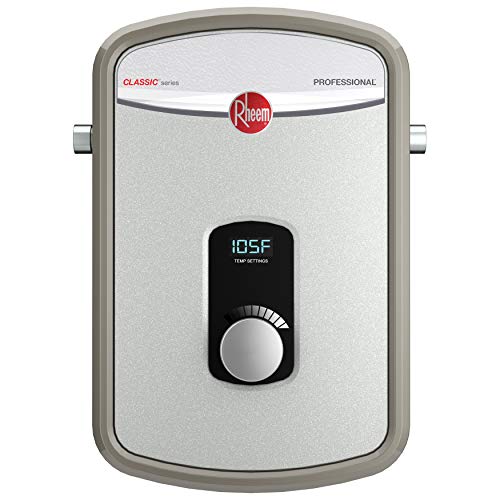
Rheem’s 11kW model offers an external digital thermostatic control with LED display and self-modulating power to match hot water demand. It features durable copper immersion heating elements and field serviceability, with a flow rate up to 2.68 GPM. The device is designed to balance performance with straightforward installation, making it a dependable option for moderate hot water needs in homes with compatible electrical service.
Key points: adjustable temperature display, self-modulation, robust heating elements, and serviceability. Ensure electrical capacity aligns with your panels and that the expected flow meets household hot water requirements.
Buying Guide: Key Purchase Considerations And Comparisons
Power Requirements: Electric tankless heaters demand substantial electrical service. Units range from 11kW to 27kW and typically require 40–60A breakers per circuit. Verify your panel capacity and wire gauge (usually 6 AWG for higher loads, 8 AWG for moderate loads) before purchasing.
Flow And Performance: Compare GPM ratings at a standard temperature rise. Higher GPM often means greater upfront electrical needs but better performance for multiple outlets. Consider your peak hot-water needs for showers, sinks, and appliances simultaneously.
Installation And Space: Tankless units save space but require precise mounting and adequate ventilation if applicable. Some models are under-sink or compact for tight areas, while others are wall-mounted with larger footprints.
Temperature Control: Look for digital displays and self-modulating technology that adapt power to flow and incoming water temperature. Smart features like WiFi control add convenience but may increase upfront cost.
Durability And Certifications: ETL or UL listings indicate safety compliance. Copper immersion elements typically offer longer life, while protective features such as dry-boil protection and overheating shutoffs improve reliability.
Cost Of Ownership: Although prices aren’t listed here, factor in installation complexity, electrical upgrades, and potential savings from reduced standby heat loss. Self-modulating units often deliver meaningful energy savings over traditional tank heaters.
Best-fit Scenarios: Choose smaller units or under-sink models for single-point needs or tight spaces; select higher-wattage, multi-outlet units for whole-house performance in homes with larger hot-water demand and robust electrical service.