Best Blenders for Smoothie Making: Top Picks for Creamy, Consistent Drinks
Finding the right blender can transform busy mornings into effortless, healthy routines. This guide highlights five reliable models that excel at smoothie crafting, ice crushing, and versatility for other blending tasks. Each pick balances power, capacity, and user-friendly features to help you blend like a pro at home.
| Product | Brand | Key Strength | Representative Features |
|---|---|---|---|
| Ninja BN701 Professional Plus | Ninja | High power and Auto-iQ presets | 1400-watt peak, 72-oz pitcher, 3 Auto-iQ programs |
| Ninja BL660 Professional Compact | Ninja | Compact but capable | 1100-watt, 72-oz pitcher, 3 manual speeds, to-go cups |
| Ninja Kitchen System BR601AMZ | Ninja | Versatile kitchen system | 1200-watt, 5 presets, 72-oz pitcher, includes food processor |
| MAGETANG Smoothie Blender | MAGETANG | High-powered for smoothies and frozen drinks | 1800-watt motor, 70-oz container, six blades |
| BLACK+DECKER PowerCrush | BLACK+DECKER | Budget-friendly power and reliability | 700-watt, 6-cup glass jar, 4 speeds, pulse |
The following sections review five standout blenders, focusing on performance, capacity, ease of use, and value for smoothie enthusiasts. Each product section includes a concise overview, notable strengths, and how it fits different blending needs.
Ninja BN701 Professional Plus Blender

The Ninja BN701 blends power and convenience with a 1400-peak-watt motor and Total Crushing Blades designed to pulverize ice for smooth smoothies and frozen drinks. Its Auto-iQ presets simplify everyday blending by providing three programs for smoothies, frozen drinks, and even ice cream. The unit includes a large 72-ounce pitcher, ideal for family batches or entertaining, and a dark gray finish that fits modern kitchens. This model emphasizes robust blending performance with intuitive controls, making it a versatile workhorse for daily smoothie routines.
Key strengths include strong ice-crushing capability and preset programs that reduce guesswork for beginners. If you frequently blend ice and frozen ingredients or want a straightforward “press and go” experience, the BN701 offers dependable results with minimal fuss. Potential drawbacks include its size; the 72-ounce pitcher may be unwieldy for single servings, and cleanup involves disassembling the pitcher and blades.
Ninja BL660 Professional Compact Blender

The Ninja BL660 delivers a balanced blend of power and portability with an 1100-watt motor and a substantial 72-ounce pitcher. It’s designed for a range of tasks—from smoothies and frozen drinks to sauces—making it a solid all-purpose option. The blender offers three manual speeds, pulse control, and a dedicated single-serve function, which supports quick, personalized blends without preparing a full batch. The active pitcher design supports frequent family blending and meal prep.
Strengths include versatility and capacity, plus a built-in single-serve option for quick smoothies on the go. The trade-off is that larger batches can require more space on the countertop, and cleaning the pitcher and blades may require some effort compared with smaller personal blenders.
Ninja Kitchen System BR601AMZ
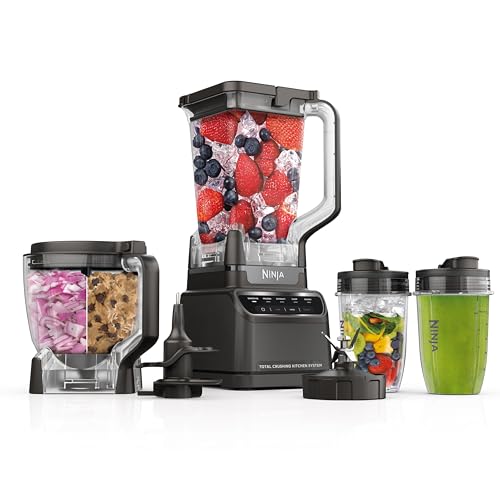
The Ninja Kitchen System BR601AMZ expands beyond smoothies with a full food processor bowl, blending up to 1200 watts of power for multi-function kitchen tasks. It includes a 72-ounce pitcher for family-sized batches and five presets that streamline common tasks like smoothie making, frozen drinks, and dough mixing. This system is well-suited for households that want a single appliance capable of blending, chopping, and processing ingredients for a variety of recipes.
Notable advantages are its versatile presets and the convenience of a dedicated food processor attachment. However, the system design is larger and heavier than compact personal blenders, which may impact storage and counter space. For regular batch blending and food prep, this model provides strong value through its multi-functionality.
MAGETANG Smoothie Blender

The MAGETANG Smoothie Blender emphasizes high-speed blending with an 1800-watt motor and a large 70-ounce BPA-free container, designed for family-sized batches and versatile use beyond smoothies. Its six-blade stainless steel design helps ensure smooth textures when processing ice, frozen fruit, nuts, and vegetables. With a high-speed rating and a substantial pitcher, this model targets households that want quick, consistent results for smoothies, sauces, and frozen drinks.
Key strengths include exceptional motor power and blade design for ultra-smooth textures and a large capacity suitable for gatherings. A potential consideration is the care required for cleaning and assembling the blades and pitcher after heavy blending sessions. It’s a strong option for those prioritizing power and high-volume blending in one appliance.
BLACK+DECKER PowerCrush Countertop Blender
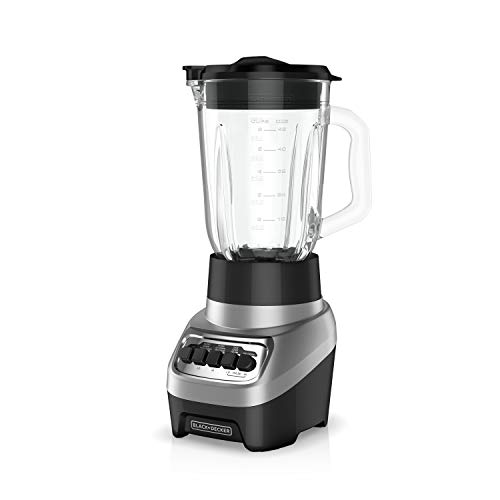
The BLACK+DECKER PowerCrush offers solid value with 700 watts of power and a durable 6-cup glass jar. Its 4-speed settings plus pulse capability cover a wide range of blending tasks, from smoothies to chopped ingredients. The QuadPro 4-tip blade is designed to create a steady flow that brings ingredients to the blades efficiently, which helps achieve smooth beverages and sauces without constant monitoring. This blender is a practical choice for budget-conscious households that still want reliable performance for daily smoothies and basic blending needs.
Considerations include respecting the blade design and jar capacity for thick mixtures, as well as acknowledging that while it’s not the most powerful option here, it delivers dependable results at a lower price point. It’s well-suited for light to moderate use, especially for single servings or small families.
Buying Guide: What to Consider When Choosing a Blender for Smoothies
Power and blade design are the core factors for smoothie quality. Models with 1000+ watts generally deliver smoother textures, especially with ice and frozen fruit. Look for blades optimized for crushing ice and a jar design that minimizes air pockets and promotes consistent blending.
Capacity matters depending on your household. A 64–72 ounce pitcher is ideal for family batches, while personal blenders with 14–20 ounce cups are better for single servings and on-the-go use. If you entertain often, a larger base and multi-function system (such as a blender/processor combo) can save time in meal prep.
Presets and speed controls influence convenience. Auto-iQ or preset programs simplify blending by selecting optimized speeds and intervals, which can help beginners achieve consistent results. Manual speed control offers customization for texture and ingredient types.
Durability and material quality are important for long-term value. Glass jars resist staining and odors but can be heavier; BPA-free plastic pitchers are lighter and often more affordable, though durability varies. Stainless steel blades and well-sealed lids reduce leaks and improve safety during operation.
Maintenance is a practical consideration. Detachable blades, dishwasher-safe parts, and easy cleanup reduce friction after every blend. If you frequently blend fibrous greens, nuts, or seeds, ensure the blades remain sharp and the jar is easy to clean.
Noise and ergonomics can influence daily use. Some high-powered blenders can be noisier, while compact models may be quieter but less capable with large batches. Consider countertop space and how often you’ll use the blender for both smoothies and other tasks like chopping or sauce preparation.
Budget and value should be weighed against features. Higher-w power blenders with extra attachments may offer better long-term versatility, but there are solid mid-range options that deliver reliable smoothie performance without unnecessary extras. Choose a model that aligns with your typical batch size, preferred textures, and desired level of convenience.