Best Ejector Pumps for Basement Bathrooms: Top Picks for Reliable Waste Removal
Choosing the right sewage ejector pump is essential for keeping basement bathrooms dry and free from backups. This guide highlights five dependable models commonly used for basement toilets, sinks, and other utilities. Each option balances power, durability, and ease of installation. Read on to compare performance features, installation considerations, and what to look for when selecting a pump that fits your basement layout and waste line requirements.
| Product | Brand | Key Feature |
|---|---|---|
| Superior Pump 93015-U Cast Iron Tethered Float Switch Sewage Pump | Superior Pump | 2″ discharge; handles 2″ solids |
| Ensurix 1200W Macerator Pump – 2800GPH | Ensurix | High lift; smart PCB control |
| Acquaer 3/4HP Submersible Sewage Pump | Acquaer | 6400 GPH; 29 ft lift; durable cast iron |
| FOTING 1HP Submersible Sewage Pump | FOTING | 5600 GPH; 2″ discharge; solid handling |
| FavorCOOL 3/4 HP Submersible Sewage Pump | FavorCOOL | 6400 GPH; 2″ NPT; piggyback float |
Below you will find a concise overview of each model, followed by a practical buying guide to help you choose the best fit for your basement bathroom needs.
Superior Pump 93015-U Cast Iron Sewage Pump

The Superior Pump 93015-U is built with a cast-iron pump body for durability in basement installations. It includes a tethered float switch with a piggy-back plug for simple automatic operation. A 2″ discharge and capability to pass 2″ solids make it suitable for residential sewage ejector setups prone to larger waste. This model emphasizes reliability in frequent-use scenarios such as basement bathrooms and utility rooms.
- Discharge: 2″
- Solids handling: 2″
- Float: Tethered with piggy-back plug
Ensurix 1200W Macerator Pump
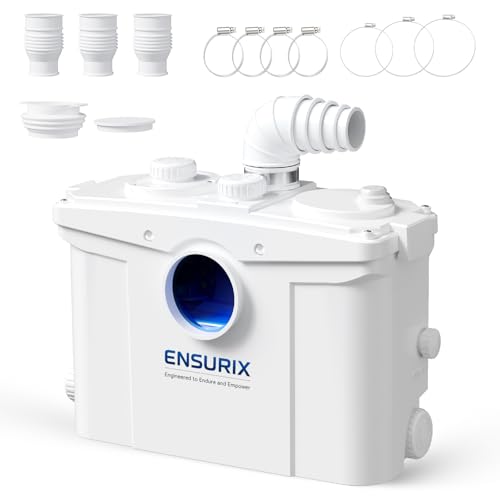
This macerator pump combines high power with smart control. A 1.6HP motor delivers up to 2800 GPH and supports significant vertical and horizontal lift, enabling bathroom fixtures to be placed away from existing waste lines. The PCB smart control adjusts start/stop based on flow, reducing noise and extending pump life. Multi-inlet capability allows connections to multiple fixtures (basin, sink, shower, washing machine) while a built-in check valve reduces backflow.
- Power: 1.6HP motor
- Lift: up to 28 ft vertical, 280 ft horizontal
- Smart PCB control; multiple inlets
Liberty Pumps P382LE41 Simplex Sewage System

The Liberty Pumps simplex package emphasizes ease of installation with a 24 by 24-inch basin and a separate access cover. The design supports typical below-grade basements and standard septic connections. This system is suited for homeowners seeking a compact, ready-to-install solution with reliable performance for a single bathroom system.
- Removable/accessible cover
- Shallow 24″ basin design
- Simplex configuration for single bathroom setups
Acquaer 3/4HP Submersible Sewage Pump

The Acquaer 3/4HP model combines strong flow with solid handling and a robust cast-iron housing. It can pump up to 6400 GPH and reach a vertical lift of up to 29 feet. The pump includes an automatic tethered float switch for hands-off operation and a standard 2″ NPT discharge. It’s designed for residential sewage and sump basins in basements.
- Flow: up to 6400 GPH
- Lift: up to 29 ft
- Cast iron casing; 2″ NPT discharge
FOTING 1HP Submersible Sewage Pump

The FOTING 1HP submersible pump offers a high capacity of 5600 GPH with a 2″ discharge and a rugged cast iron/stainless steel construction. It includes an adjustable tethered float switch and a 10-foot power cord with piggyback plug for automatic operation. It’s designed for basement and below-grade installations where solids up to 1.25″ may need to pass.
- Flow: 5600 GPH
- Discharge: 2″
- Solids handling: Up to 1.25″
FavorCOOL 3/4 HP Submersible Sewage Pump
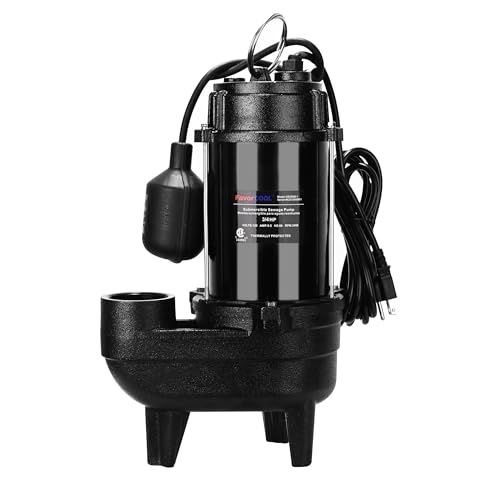
The FavorCOOL 3/4 HP model delivers up to 6400 GPH with a 2″ NPT discharge and a piggyback tether float switch for automatic operation. The unit uses a rugged cast-iron housing and a non-clogging vortex impeller, designed to pass solids up to 2″. It’s positioned as a durable option for basements and other below-grade installations.
- Flow: up to 6400 GPH
- Discharge: 2″
- Solids handling: Up to 2″
Buying Guide: Key Considerations For Basement Sewage Pumps
Selecting the right ejector pump involves analyzing several factors to ensure reliable performance under basement conditions. The following perspectives help cover typical scenarios and common trade-offs.
- Flow rate vs. lift: Higher GPH is beneficial for multi-fixture basements, but ensure the lift height matches your basement’s vertical distance to the sewer line. Pumps with 5000–6400 GPH are common for full basements; choose based on fixture count and waste line layout.
- Discharge size and solids handling: A 2″ discharge with the ability to pass 1–2″ solids is desirable, especially if the basement connects to a shared line or if solid waste is a concern.
- Power and efficiency: Pumps with efficient motors and smart controls reduce energy use and noise. Look for automatic float switches or integrated control boards that optimize on/off cycling.
- Durability and materials: Cast iron housings offer robust durability in basement environments. Stainless steel components may provide additional corrosion resistance in damp settings.
- Installation considerations: Compact basins with accessible covers simplify maintenance. Some systems are designed as complete kits with basins and mounting hardware for faster setup.
- Maintenance and service life: Check for thermal overload protection, clog-resistant impellers, and check valves to prevent backflow. A well-sealed, IP-rated design helps resist basement moisture.
- Electrical safety: Ensure the pump is plugged into a ground fault circuit-interrupter (GFCI) outlet per local codes. Do not lift pumps by cords, and avoid dry-running by using automatic float controls.
- Noise and vibration: Look for features like quiet-start technology, proper isolation, and well-balanced impellers to minimize basement noise during operation.
When sizing and selecting a pump, consider the basement footprint, the number of fixtures draining into the system, potential future renovations, and local soil or waste-line conditions. For challenging layouts, a macerator or multi-inlet design can provide flexibility and simplify installation.